
The Team
The Kinomatics team consists of Deb Verhoeven, Bronwyn Coate, Katarzyna Musial-Gabrys, Ben Eltham, Skadi Loist, Elizabeth Prommer, Sarah Taylor, Alwyn Davidson, Paul S. Moore, Xenia Leontyeva, Pete Jones and Aresh Dadlani. Our approach to research is collaborative and interdisciplinary. Collectively, our academic backgrounds include cinema studies, creative industries, digital humanities, cultural policy, network analysis, cultural economics, geography, geographic information systems, cartography, visual arts and data visualisation. The Kinomatics project exemplifies changing patterns of humanities research that highlight that the humanities is increasingly a global, multidisciplinary and networked effort performed by scholars that dynamically collaborate to achieve specific objectives.

Deb is Professor Emeritus and a Canadian Research Laureate having held the role of Canada 150 Research Chair at the University of Alberta for the past six years. Prior to taking up a position in Canada Deb was Associate Dean of Engagement and Innovation at University of Technology Sydney (UTS).
Deb was the founding Project Director of Humanities Networked Infrastructure (HuNI) a national Virtual Laboratory project funded by NeCTAR (National eResearch Collaboration Tools and Resources). Deb is a former CEO of the Australian Film Institute and was inaugural Deputy Chair, National Film and Sound Archive of Australia. Deb has held many board positions, serving as a foundational board member of Canada’s digital research software provider NDRIO (now the Alliance), and served for five years on the board of CANARIE, Canada’s peak digital research infrastructure provider. Deb has previously held board positions at the Victorian eResearch Strategic Initiative (VeRSI) and the Tasmanian government’s Digital Futures Advisory Council. For services to the film industry Deb was admitted to the Australian Cinema Pioneers Association in 2025.
Deb is the author of more than 150 journal articles and book chapters as well as a book on Jane Campion published by Routledge in 2009 and Sheep and the Australian Cinema published by Melbourne University Press in 2006. Deb is a former Chair of the widely read film journal Senses of Cinema and was Editor for the journal Studies in Australasian Cinema. Deb currently sits on the Advisory Board of the Department of the Interdisciplinary Faculty at Rostock University and the Editorial Board for the Journal of Cultural Analytics.
In addition to scholarly publications and media appearances, Deb has focused on the development of online research resources such as the Cinema and Audiences Research Project (CAARP) database and The Ultimate Gig Guide (TUGG) an online archive of live music information. In 2010 this work was recognized by the Australian Teachers of Media for bonza: an online film and TV research resource (Best Tertiary Education Resource Award).
See Deb’s website here or find her on Bluesky at @bestqualitycrab.

Bronwyn an Associate Professor in economics based in the School of Economics, Finance and Marketing at RMIT. Bronwyn’s research explores different aspects of art and culture with a focus on economic implications using quantitative techniques. Key areas covered in Bronwyn’s research include the creative industries, Indigenous cultural production, cultural consumption and film economics. Through this work Bronwyn champions interdisciplinary approaches in research reflected in her collaboration with experts from a wide range of disciplines within academia as well as industry professionals and policy makers to address real world problems.
Bronwyn served as the Executive Secretary/Treasurer for the Association for Cultural Economics International (ACEI) between 2018 and 2024. She is currently Editor of Book Reviews for the Journal of Cultural Economics.
Within RMIT Bronwyn is recognised as a Regenerative Futures Institute Fellow. She also co-founded and co-leads the Cultural Value Impact Network which champions interdisciplinary approaches to articulating cultural value and also Bronwyn is an affilate of the Centre of Organisations and Social Change.
Find her on Twitter at @Bronnny123.
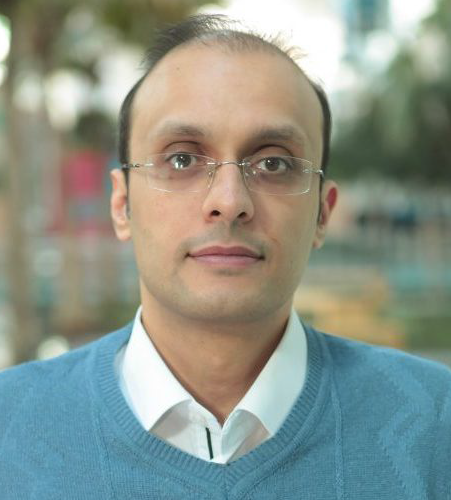
Aresh is an Assistant Professor in the School of Computing Sciences and Mathematics at Mount Royal University (MRU), where he leads the INtelligent COmmunications and DEcision netwoRks (INCODER) Lab. Before joining MRU, Aresh was a Postdoctoral Fellow at the Faculty of Arts – Media Tech Studies (MTS) of the University of Alberta (UofA). He also holds an Adjunct Professor position in the Department of Electrical and Computer Engineering, School of Engineering and Digital Sciences (SEDS) at Nazarbayev University (NU), where he was an Assistant Professor from 2017 to 2022. At NU, he led the Complex Networks and Systems Laboratory (CNSL), where his research team primarily focused on adopting state-of-the-art analytical tools to characterize and control the dynamics of large-scale societal and wired/wireless communication networks.
Check Aresh’s personal webpage.
Alwyn Davidson – Deakin University

Alwyn is an early career researcher specialising in the digital humanities and geovisualisation. She holds a PhD in geo-spatial science. Alwyn’s research interests include the visualisation of humanities data, the application of GIS and spatial techniques, the analysis of cultural datasets, and working within an interdisciplinary environment.

Ben is a Lecturer in Media and Communications at Monash University’s School of Media, Film and Journalism. Ben’s primary research interest is the public policy of culture in Australia, particularly at federal level. Ben’s monograph, When the Goal Posts Move: Patronage, power and resistance in Australian cultural policy 2013-2016 was published by Currency House in 2016.
Ben is also sought out as a cultural policy consultant by federal, state and local policymakers, authoring reports and working with policymakers and arts industry organisations, including the federal Department of Industry, Creative Victoria, the Victorian Music Development Office, the City of Sydney and the National Association for the Visual Arts.
Ben also works extensively in the popular media as a journalist and essayist. He is a regular contributor to journals such as Crikey, Guardian Australia, Overland, Meanjin and the Sydney Review of Books. In 2020, Ben’s professional standing as a journalist was recognised when he served as a judge for the Walkley Awards for Excellence in Journalism.
Ben is active within the union movement. He is the current President of the National Tertiary Education Union at Monash branch, and a member of the national freelance committee of the Media, Entertainment and Arts Alliance.

Pete is a quantitatively trained social scientist who has completed postdocs at the University of Alberta and the University of Manchester. His main research explores what the relational perspectives and tools of social network analysis can add to our understanding gender and inequality in cinema, both on and off-screen. Broader research interests include inequalities in the creative and cultural industries, feminist media studies, social network analysis, and the intersection of computational social science and pop culture. Pete is passionate about open source software and open science.
Check his website and follow him on the Fediverse at @pete@fedi.petejon.es.
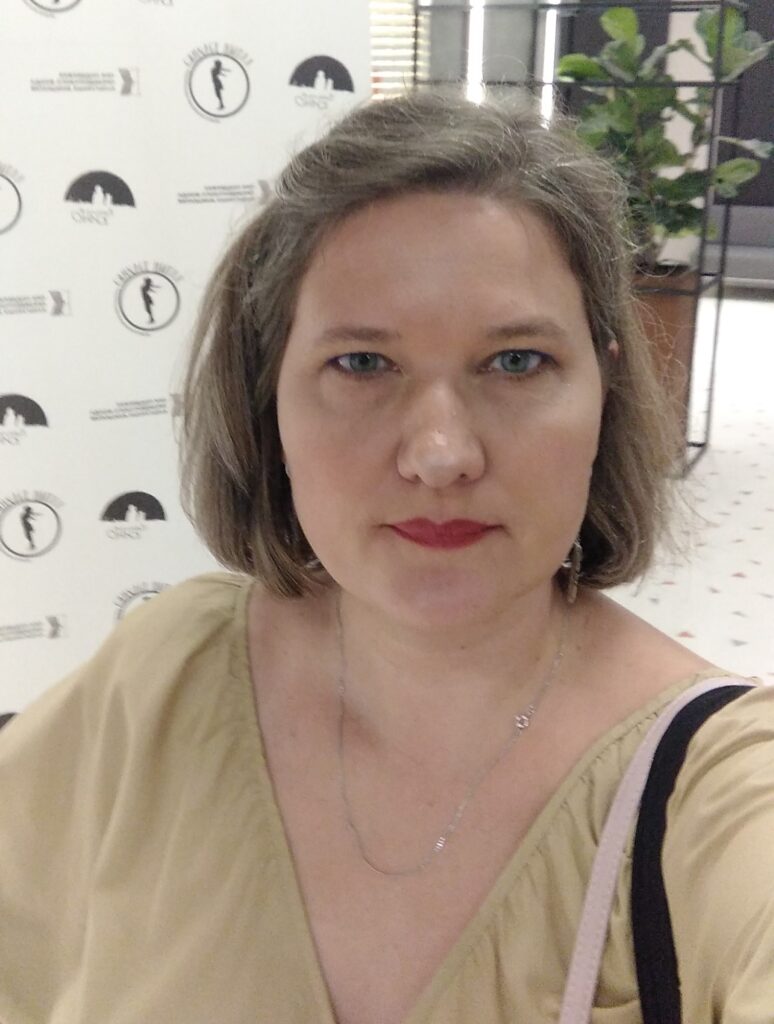
Xenia is a graduate research assistant at the School of Film, Media & Theatre, Georgia State University (USA), pursuing a second doctoral degree (Ph.D.) in Film and Media Studies. She holds a Candidate of Sciences (Ph.D.-equivalent) degree in economics and an M.A. in sociology.
From 2006 to 2019, she worked as a cinema market analyst at Nevafilm Research (Russia) and from 2009 to 2022 as a consultant for the European Audiovisual Observatory (France). She has taught film and TV industry studies at the Saint Petersburg State Institute of Cinema and Television, the Russian State Institute of Cinema (VGIK), and the Moscow Film School.
She is co-founder (2020), former co-president (2020–2024), and current organisational secretary (since 2024) of the Russian Cinema Trade Union.
Her research focuses on media industries, labor rights in film production, and women in cinema.
Her work has been published in KinoKultura, In Media Res: A MediaCommons Project, Journal of Cultural Analytics, and Studies in Russian and Soviet Cinema.
X: @XLeontyeva
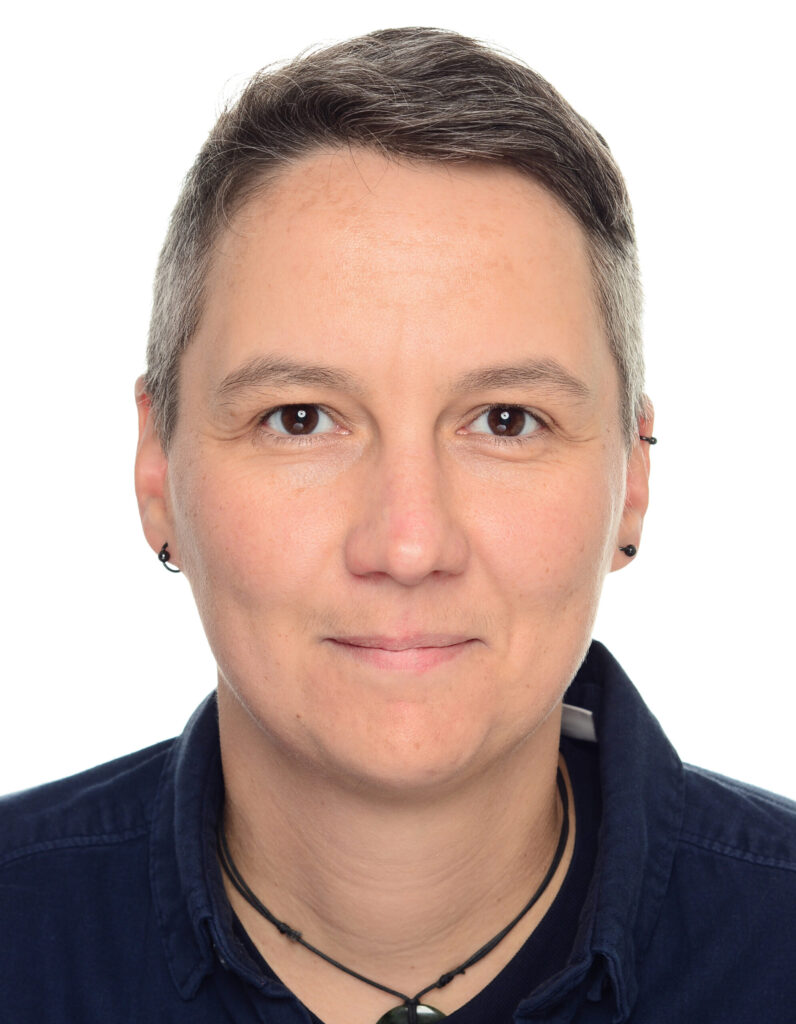
Skadi is Associate Professor of Film Studies in the Department of Art and Media Studies at the Norwegian University of Science and Technology (NTNU) in Trondheim. Their research focuses on film festivals and circulation, digital methods, working conditions, diversity and sustainability, and queer film culture.
Prior to joining NTNU in 2025, Skadi was Assistant Professor for Production Cultures in Audiovisual Media Industries at the Film University Babelsberg KONRAD WOLF (2018-2025) and was invited as Max Kade Visiting Professor at the University of Notre Dame, IN/USA, in Spring 2025.
Skadi has led several international research projects, including Film Circulation on the International Film Festival Network and the Impact on Global Film Culture (BMBF 2017–2022), which combined digital humanities with film festival research, and GEP Analysis (DFG/ESRC/SSHRC 2021–2024), which used quantitative, policy and network analysis to examine persistent gender inequalities in the film industries of Germany, Canada, and the UK.
Skadii’s work has been published in multiple languages across journals such as Screen, NECSUS, Zeitschrift für Medienwissenschaft, Diogène, Studies in European Cinema, Media Industries Journal, and Nordic Journal of Media Studies. They have co-edited several special issues and volumes, including the widely used textbook Film Festivals: History, Theory, Method, Practice (Routledge 2016, with Marijke de Valck & Brendan Kredell), and publications on gender, queer media, and German film industries.
Skadi co-founded the Film Festival Research Network (FFRN) and the European University Film Award (EUFA). They have held leadership roles in NECS (Steering Committee 2015-21), SCMS, and GfM, and serve on the editorial board of NECSUS – European Journal of Media Studies and Journal of Festive Studies.

Michelle is an award winning lecturer, artist and designer. She is currently the Co-Ordinator of History and Theory in the Bachelor of Interior Design (Honours) program at the School of Architecture and Urban Design at RMIT University.
Michelle’s practice is research-based. She works within the intersection of art and design through film, installation, performance, textiles, and design.
Michelle has exhibited in Australia and overseas. Most recently A Score for Surface (2025), Yellow Brick, GR; Melbourne Now (2023) National Gallery of Victoria, AU; Attention Seeker (2022), La Trobe Institute of Art, AU; Petite Miniature Textiles (2022) Wangaratta Art Gallery, AU; Far – Floor Ratio (2020) 3 137, GR; Unfinished Business (2018) ACCA, AU; Nauhaus (2019) Melbourne Design Festival, AU; Richter-Fest-2017 (2017) Science and Art Space, RU; Filmideo (2017) Index Art Center, US; Billboard Project (2015) CCP, AU; Vis Com (2014) Unitec University, CO; and Mildura Palimpsest (2013), AU.

Paul is Professor at Toronto Metropolitan University (formerly Ryerson). His research analyzes the continual constitution of the mass market and urban modernity, with a focus on early showmanship, regulation and promotion of cinema-going in North America. His project, Circuits of Cinema, tells the history of film and media distribution from the earliest days of traveling shows to global blockbusters. With Jessica Whitehead, Multicultural Moviegoing recovers histories of immigrant audiences for diasporic cinema in Canada. Whitehead and Moore are also Canadian partners with the Media History Digital Library, helping to add digital copies of national film trade magazines. From 2012 to 2014, Moore served as President of the Film Studies Association of Canada.

Katarzyna is Professor of Network Science and Deputy Head of School at the School of Computer Science, Faculty of Engineering and IT, University of Technology Sydney (UTS). She is also a founder and co-Director of the Complex Adaptive Systems Lab within the Data Science Institute, UTS. Immediately before moving to Sydney in September 2017, she held the positions of an Associate Professor in Computing and a Head of the SMART Technology Research Group at the Department of Computing and Informatics, Faculty of Science and Technology, Bournemouth University (BU), UK. Prior to that, she worked at the King’s College London (UK) as a Lecturer in Computer Science where she was also a founder and leader of the interdisciplinary Complex Adaptive Networks and Systems (iCANS) initiative.

Elizabeth is Rector of the University of Rostock. Prior to being elected to this prestigious position in 2023 she was Professor for Communication Science and Media Studies and Director of the Institute for Media Research at the University of Rostock.
Elizabeth’s research has focussed on gendered media production cultures. Several studies document the underrepresentation of women in the audiovisual media, behind and on the screens. Elizabeth has conducted the fieldwork for the FFA study Cinema and Gender, 2017, and also for Television Film and Gender, 2017 for the public broadcasters, as well as the Diversity Report 2016 for the German director’s guild. The study Audiovisual Diversity in 2017 analyzed a representative sample of German TV and Cinema and the representation of gender. Elizabeth was part of the European Audiovisual Women (EWA) study: Where are the female directors in 2016.
As a researcher, Elizabeth is strongly interested in the ‘moving picture’ on all possible media platforms (cinema, tv, internet, mobile media and new forms in the future) and the (changing) audiences and the modes of reception in changing media environments. This explains the three media environments she has published on: cinema, television, and internet. Elizabeth’s theoretical interest in the media use of different generations ties all these fields together.
Her research company Prommer Media Consulting (until 2011), Elizabeth consulted film producers and film distributors about marketing strategies and conducted test screenings. Her clients included the Oscar winner “Nirgendwo in Afrika”, the Box office hit “Schuh des Manitu” and several other film genres. Elizabeth has worked as a trainer in the EU executives training program of CICAE, the federation of art cinemas.
Find her on Twitter at @Prommer_Elli.

Sarah has over 20 years of experience in both data and research roles and she is now a Lead Data Engineer at RMIT University. She holds a PhD in Geospatial Science and a postgraduate certificate in software development, and she is an expert in Geographic Information Systems (GIS) and the related tasks of data wrangling and coding. She has published on a mix of topics including social housing, learning analytics, and popular music history. Her PhD research focused on live music in Sydney and Melbourne since the early 1980s, using a combination of historical GIS and interviews with musicians. Her experience with music informed her PhD research. She is a dedicated musician and creator with folk-music-meets-research group Taylor Project, active since 2006 and recently expanding into research-informed cabaret shows.