
The following question popped up on social media recently:
“Just wondering if the current fuel shortage is affecting cinema attendances? I know I have stopped driving the extra distance to support my favoured independent screens.”
This got us curious about whether there are any signs in the data that the local box office has taken a hit since Australians started feeling the effects of the oil crisis.
To answer that question, there’s really two things to look at. The first is whether attendance has gone down since the fuel prices started to go up. The second is whether this is any different to what would normally happen at this time of year – as we’ve been exploring in recent posts, there are regular rhythms that influence when top-earning films tend to hit cinemas.
Chart 1 helps us to answer both of these parts. We can see that the red line – the overall Australian daily box office through 2026 – didn’t notably fall off after the start of the US/Israel-Iran war. The box office level remained consistent with what was happening before the oil prices started to rise in Australia.
Chart 1
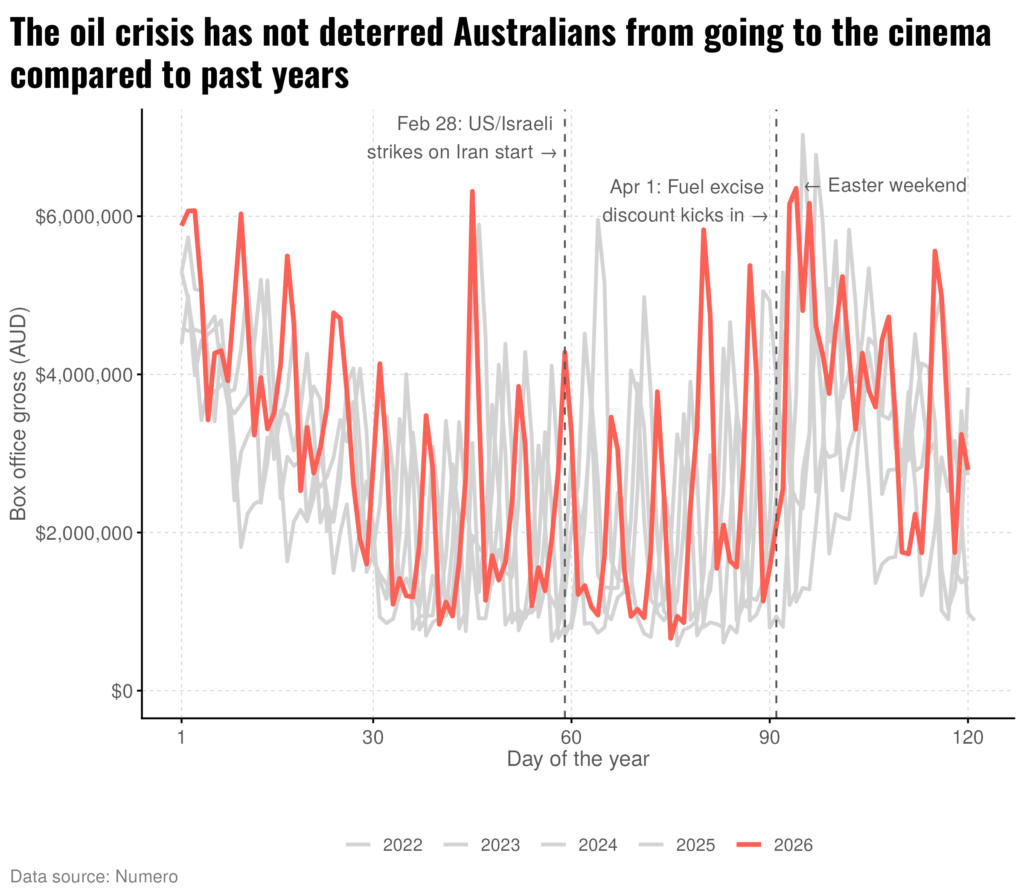
The grey lines in Chart 1 show the box office from the same date in previous years for comparison, and we can see that what happened through March was totally normal for cinemagoing in Australia. Cinemas actually earned a little more than usual in the final weekends of March, when the oil prices were highest and the fuel excise relief hadn’t yet been implemented.
Interestingly, although fuel prices started to fall as soon as the fuel excise came into effect, this doesn’t seem to have translated into an increase in trips to the cinema. There is a bump in the first week of April, but that was the Easter weekend, which is always one of the bigger weekends of the year for cinemas.
So that’s the national picture, but the fuel crisis doesn’t affect all Australians in the same way. The decision to go to the cinema is very different if you’re in regional Western Australia versus the Melbourne CBD. So let’s take a look at the same data but broken down by major cities and regional areas across the country in Chart 2.
Chart 2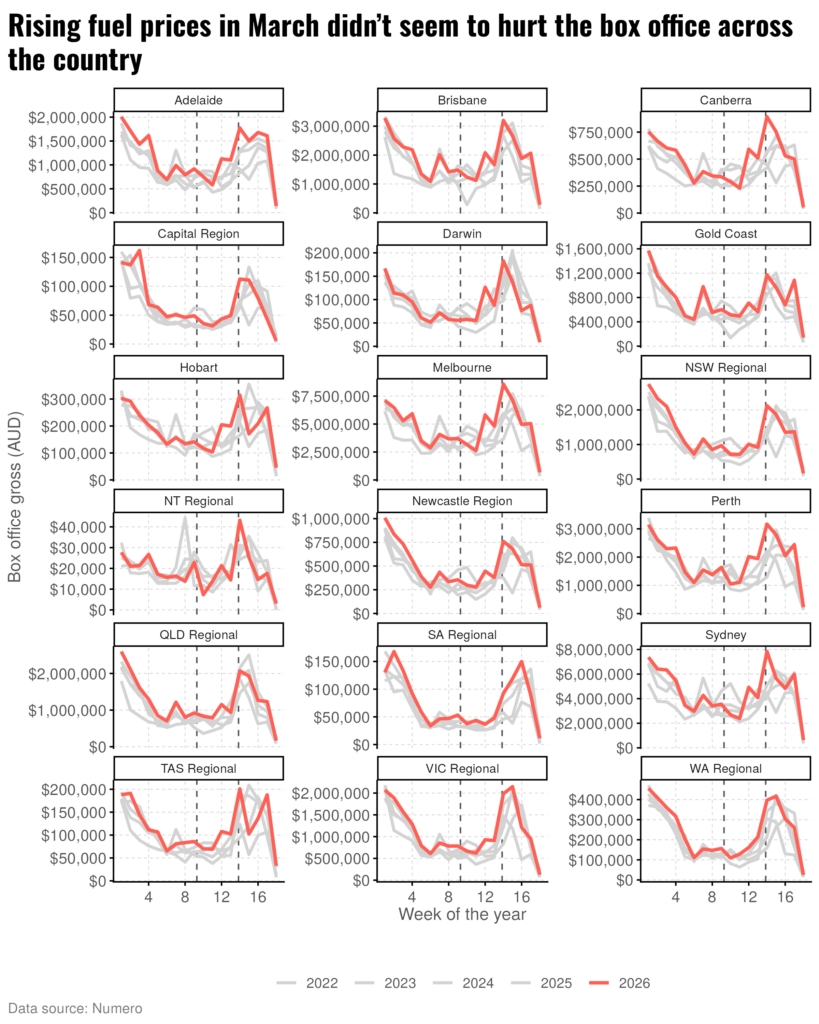
Across the country, we can see that the Australian box office has been making at least as much money as usual since the fuel crisis started. Even outside the major urban centres, there was an uptick in box office towards the end of March, when fuel prices were at their highest.
Of course, we’ll never know what the figures would have looked like without the oil crisis – maybe the 2026 figures would have been even higher. But what we can say from looking at the data is that the box office figures didn’t take a hit once the fuel prices started rising, and the numbers for 2026 are very healthy in comparison with recent years.